Vitamin K2 is not just used once and thrown away. It is checked back in, refreshed, and put back into circulation by a small enzyme working quietly inside the liver. Most conversations about vitamin K2 focus entirely on how much a person takes. But research tells a more interesting story of how well that enzyme does its job may matter more than the number printed on the label.
Vitamin K activates a protein, is converted into a spent form, and is then restored to an active state by an enzyme called vitamin K epoxide reductase, or VKORC1. Researchers studying the cycle have found that a single vitamin K molecule can support several hundred rounds of this activation process before it is finally used up (Michaux et al., 2018). That efficiency is precisely why the body needs comparatively little vitamin K to begin with, especially set against how much of other vitamins are required daily. It also means the enzyme responsible for this recycling, is what ultimately limits how much active vitamin K2 reaches bone and blood vessels.
The Recycling Varies From Person to Person
This enzyme does not behave the same way in every liver. A study examining VKORC1 gene expression identified a genetic variation that changes how actively the enzyme is produced, and the effect appeared specifically in liver tissue — the same variation showed no comparable effect in heart or blood cell samples from the same individuals (Wang et al., 2008).
This variation is well documented as one of the main reasons people require different doses of warfarin, a medication that works by blocking this exact enzyme. Set the medication aside, and the underlying lesson for vitamin K2 remains that if the liver’s capacity to recycle vitamin K genuinely differs from person to person, then two people taking the same dose should not automatically be expected to end up in the same place.
What Happens When Liver’s Capacity Is Compromised
The clearest picture of this comes from patients whose liver function has already declined. A 2025 study followed 122 people with cirrhosis who received vitamin K to help correct a coagulation problem, and found the treatment improved outcomes in only some of them — described by the researchers as a “selective therapeutic effect, rather than universal efficacy.”
In patients with more advanced disease, the liver’s reduced capacity to activate vitamin K–dependent proteins limited the benefit even when dosing was adequate, meaning a meaningful number of patients showed no real improvement despite receiving comparable treatment to those who did respond (Lixandru et al., 2025). The dose was not the missing piece in these cases. The liver’s ability to use it was.
The Practical Takeaway
Cirrhosis is an extreme example, but it sits on the far end of a spectrum that exists in smaller, unnoticed degrees across the general population. Genetic differences in VKORC1 activity, along with age and general liver health, all shape how efficiently a given dose of vitamin K2 gets put to use, long before anything would register as diagnosed liver disease. None of this makes dosage meaningless as the liver still needs a supply of vitamin K2 to work with in the first place. It does mean that treating dosage as the only lever worth adjusting overlooks the actual machinery responsible for turning that dose into something useful.
Where TerraQuino Comes In
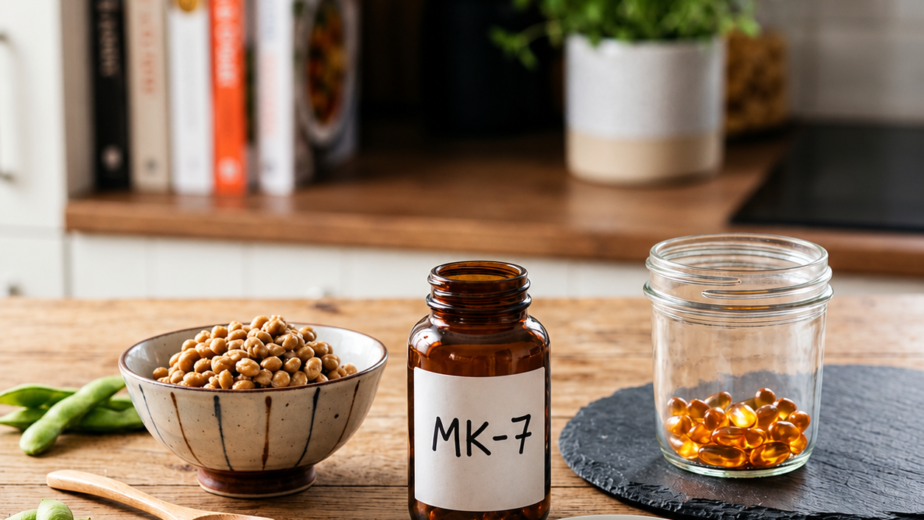
TerraQuino produces MK-7 through a controlled fermentation process, delivering long-chain, allergen-free vitamin K2-7 suited to consistent daily use.
It is formulated for tablets, capsules, softgels, sachets, and liquids, giving formulators a dependable ingredient to build around with the understanding that how the body processes vitamin K2 will always matter as much as how much of it a product contains.
TerraQuino supplies Vitamin K2-7 as an ingredient to nutraceutical brands and does not make therapeutic claims. Anyone with liver disease or on anticoagulant medication should consult their doctor before changing vitamin K intake in any form.
Frequently Asked Questions
Can a healthy liver process any amount of vitamin K2 equally well?
Even among people without diagnosed liver disease, genetic variation in the relevant recycling enzyme exists (Wang et al., 2008), so processing efficiency likely varies to some degree across otherwise healthy people, not just those with liver conditions.
Does this mean higher doses of vitamin K2 are pointless?
No. A supply of vitamin K2 is still necessary for the liver’s recycling system to work with. The research points to processing capacity as an additional factor to consider, not a reason to disregard dosage altogether.
What should someone with liver concerns know about taking vitamin K2?
That supplementation may not produce the same results it would in someone with normal liver function. A 2025 study found benefit was inconsistent among cirrhosis patients even at adequate doses (Lixandru et al., 2025), so this is a conversation to have directly with a physician.
Is this recycling process specific to vitamin K2, or does it apply to vitamin K in general?
The VKORC1 recycling mechanism applies to vitamin K broadly, including both K1 and the various K2 forms, since they share the same underlying activation cycle in the liver (Michaux et al., 2018).
References
Lixandru, M., Ionela, M., & Grosu, F. (2025). Effects of vitamin K administration in correcting coagulopathy in patients with liver cirrhosis: Retrospective clinical study. Clinics and Practice, 15(10), Article 188. https://doi.org/10.3390/clinpract15100188
Michaux, A., Matagrin, B., Debaux, J.-V., Schurgers, L. J., Benoit, E., & Lattard, V. (2018). Missense mutation of VKORC1 leads to medial arterial calcification in rats. Scientific Reports, 8, Article 13733. https://doi.org/10.1038/s41598-018-31788-6
Wang, D., Chen, H., Momary, K. M., Cavallari, L. H., Johnson, J. A., & Sadée, W. (2008). Regulatory polymorphism in vitamin K epoxide reductase complex subunit 1 (VKORC1) affects gene expression and warfarin dose requirement. Blood, 112(4), 1013–1021. https://doi.org/10.1182/blood-2008-03-144899