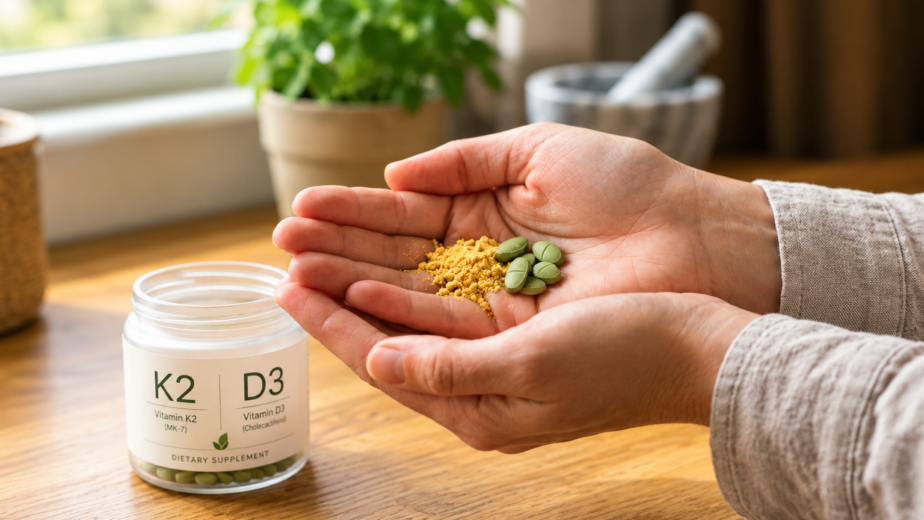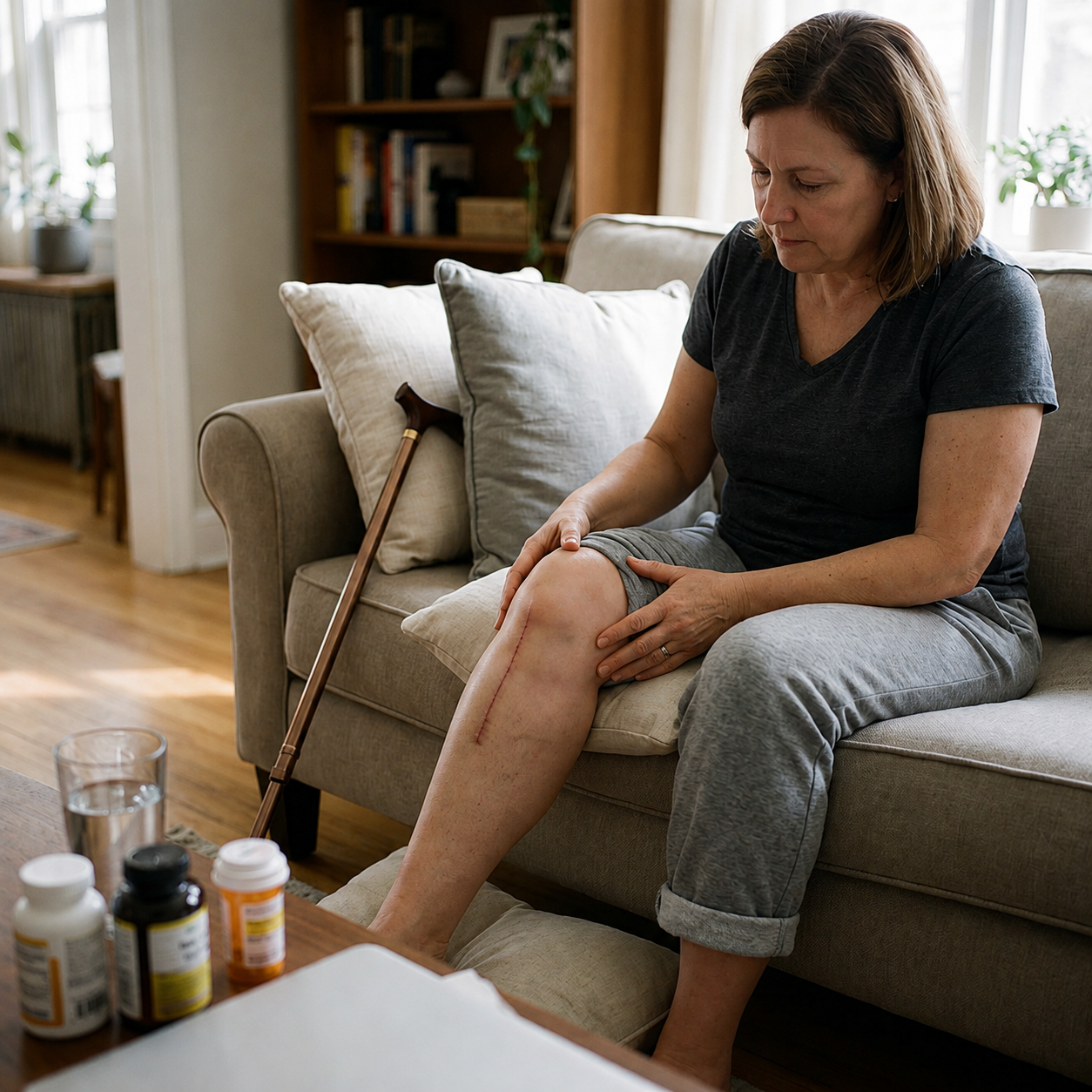
It is strange that Vitamin K2 rarely makes the vital nutrient checklist in any bone health related plans even though K2 activates the two proteins that actually direct calcium into a healing fracture site: osteocalcin and matrix Gla protein. Without enough active K2, calcium can sit in the blood without ever reaching the bone that needs it. A handful of studies including the rat fracture models, real post-operative blood panels have started measuring what happens when that nutrient is missing during recovery.
| Nutrient | Standard in post-op bone protocols? | Routine Practice |
| Calcium | Yes; routinely dosed | Yes |
| Vitamin D3 | Yes; routinely checked and dosed | Yes |
| Protein targets | Yes; standard in recovery nutrition plans | Yes |
| Vitamin K2 | Rarely mentioned, rarely tested | No |
What Happens to Vitamin K Status After Surgery
A 2018 study out of Lund University tracked vitamin K-dependent proteins in 40 patients before and up to five days after abdominal or orthopedic surgery (Dahlberg et al., 2018). In the orthopedic-surgery subgroup specifically, uncarboxylated osteocalcin which is the inactive form the body produces when vitamin K is scarce — rose significantly by day five (p = .044), while carboxylated osteocalcin, the active form that actually binds calcium into bone, fell in every orthopedic patient measured. The researchers pointed to perioperative fasting, surgical stress, and reduced dietary intake as likely drivers. None of these patients were vitamin K deficient in the classic sense. Their bodies simply couldn’t keep the relevant proteins fully activated during the exact window when new bone matrix gets laid down.
By day five after surgery, active osteocalcin which is the protein that binds calcium into new bone had dropped in every orthopedic-surgery patient measured. That’s precisely the window when new bone matrix is being built.
What Happened When Rats With Fractures Got K2
The more direct evidence comes from a 2023 controlled study in Wistar rats with surgically created tibia fractures. Twelve animals received menaquinone-7 (MK-7) daily for 30 days after the fracture; twelve received none (Ünal et al., 2023). Researchers then tested the healed bone’s mechanical strength and measured blood markers of bone formation:
| Measure (day 30, rat tibia fracture) | Result in MK-7 group vs. control | Significance |
| Breaking force of healed bone | Higher | p = .047 |
| Bone stiffness | Higher | p = .039 |
| Bone formation markers (PINP, PICP, osteocalcin) | Higher | p < .05 each |
| X-ray bone union score (week 3) | Higher | p = .014 |
Source: Unal, Dagtaş, Ongen Ipek, Sitar, & Ugutmen (2023).
Not every measure moved: histological grading of the callus tissue under the microscope didn’t reach statistical significance (p = .086 and p = .07 across two grading systems). The effect showed up more clearly in mechanical strength and blood biomarkers than in tissue appearance worth noting rather than glossing over.
Fracture Risk at Scale
A rat study and a 5-day blood panel are narrow slices of evidence. A 2022 meta-analysis pooling 16 randomized trials and 6,425 people found a broader pattern: across postmenopausal women taking vitamin K2, lumbar spine bone mineral density improved significantly (p = .006), and fracture incidence dropped (Ma et al., 2022). The population isn’t post-surgical, but it shows K2’s effect on bone strength holds up beyond rodent models and single-hospital blood draws, useful context for judging whether the orthopedic findings above are a fluke or part of a real pattern.
Timing Matters as Much as the Nutrient
Most new bone matrix forms in the first several weeks after fracture or surgery which is the same window vitamin K status tends to dip (Dahlberg et al., 2018). That makes the specific form of K2 relevant, not just its presence. A bioavailability study found that after a single dose, MK-7 stayed detectable in serum for up to 48 hours; MK-4 at the same dose wasn’t detectable at any point (Sato et al., 2012). A supplement that clears the bloodstream in hours isn’t well matched to a recovery that runs for weeks.
Where TerraQuino Fits In
TerraQuino produces MK-7 through a controlled fermentation process, delivering the long-chain, allergen-free vitamin K2-7 associated with the extended half-life documented above. It’s formulated for tablets, capsules, softgels, sachets, and liquids, and pairs cleanly with vitamin D3, calcium, and other ingredients standard in bone-support formulations. TerraQuino doesn’t market its ingredient specifically for post-surgical recovery as that clinical case is still being built but it gives formulators a bioavailability-tested form of K2 to work with instead of a generic one.
Frequently Asked Questions
Does vitamin K2 actually speed up bone healing after surgery?
The strongest direct evidence is a rat fracture-healing study, where MK-7 significantly improved callus strength and bone-formation biomarkers (Ünal et al., 2023). No large human trial has tested K2 against surgical recovery time directly yet.
Why isn’t vitamin K2 already part of standard orthopedic recovery protocols?
Research measuring K2 specifically in post-surgical patients is recent and still limited to small studies (Dahlberg et al., 2018). Vitamin D and calcium have decades more clinical trial data behind them, which is largely why they dominate current protocols.
Should I look for MK-4 or MK-7 for bone recovery support?
Most current research uses MK-7, since it stays in circulation far longer than MK-4 after oral intake (Sato et al., 2012) which is relevant over a multi-week healing window.
Can vitamin K2 replace calcium and vitamin D during recovery?
No. K2 activates the proteins that direct calcium into bone; it doesn’t supply the calcium or the absorption boost vitamin D provides. It works alongside them, not instead of them, and any change to a post-surgical nutrition plan should go through a surgeon or care team.
References
Dahlberg, S., Ede, J., Schurgers, L., Vermeer, C., Kander, T., Klarin, B., & Schött, U. (2018). Desphospho-uncarboxylated matrix-Gla protein is increased postoperatively in cardiovascular risk patients. Nutrients, 10(1), Article 46. https://doi.org/10.3390/nu10010046
Ma, M., Ma, Z., He, Y., Sun, H., Yang, B., Ruan, B., Zhan, W., Li, S., Dong, H., & Wang, Y. (2022). Efficacy of vitamin K2 in the prevention and treatment of postmenopausal osteoporosis: A systematic review and meta-analysis of randomized controlled trials. Frontiers in Public Health, 10, Article 979649. https://doi.org/10.3389/fpubh.2022.979649
Sato, T., Schurgers, L. J., & Uenishi, K. (2012). Comparison of menaquinone-4 and menaquinone-7 bioavailability in healthy women. Nutrition Journal, 11, Article 93. https://doi.org/10.1186/1475-2891-11-93
Ünal, Ö. K., Dağtaş, M. Z., Öngen İpek, B., Sitar, M. E., & Uğutmen, E. (2023). Morphological and biomechanical effects of vitamin K2 on fracture healing: An animal study on the rat tibia fracture model. Acta Orthopaedica et Traumatologica Turcica, 57(1), 17–22. https://doi.org/10.5152/j.aott.2023.21013