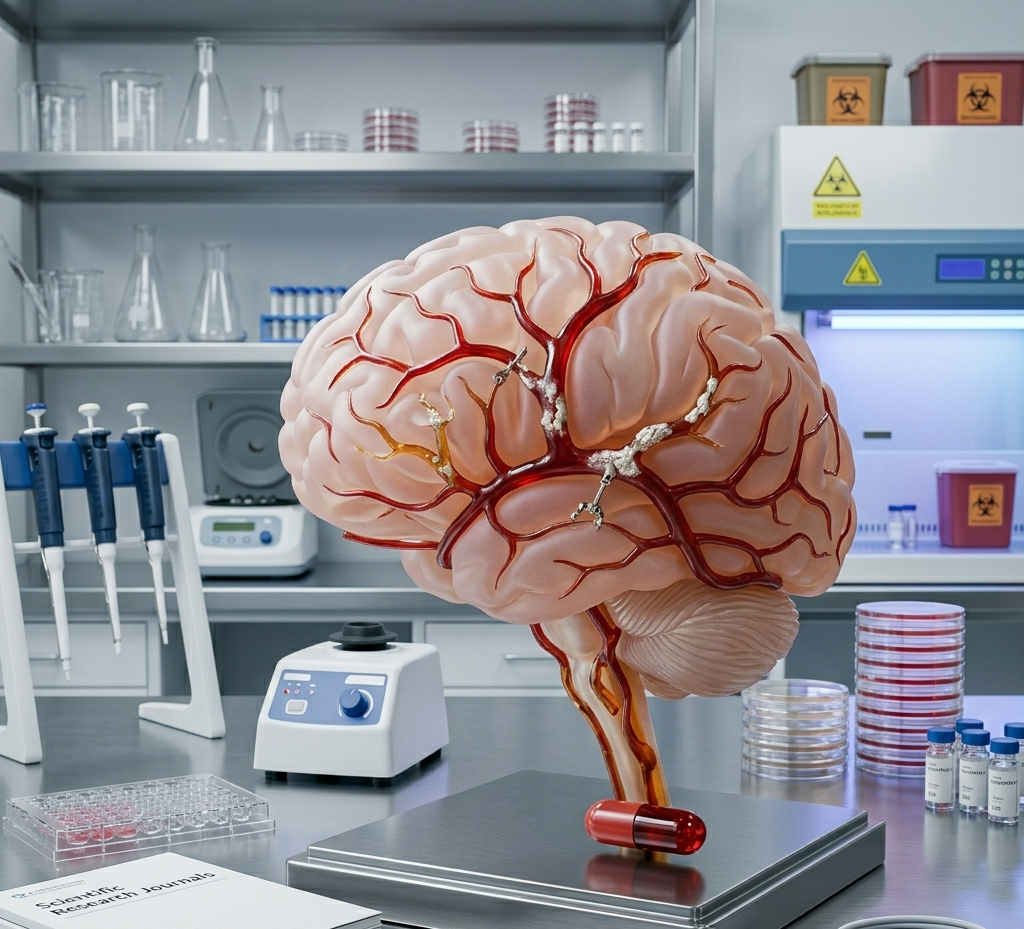
The brain makes up less than 2% of total body weight but takes up around one-fifth of all your energy requirements and oxygen supply. All activities of the brain, from simple thoughts to remembering things, to concentrating, require uninterrupted oxygen flow through cerebral vessels into the brain cells.
In another scenario, aging causes calcium to be lost from bones and deposited in vessel walls, resulting in calcification. Here, the vessel walls become rigid and narrow; their elastic property is lost, which affects the fluidity of blood flow. Even a minor reduction in flow in the vessels in the brain matters. If neurons starve of oxygen and glucose, it will result initially in brain fog, slowed memory retrieval, and difficulty concentrating, and eventually over the years in increased likelihood of vascular cognitive impairment.
In a review by Roumeliotis et al. (Frontiers in Aging Neuroscience, 2025), the pathway from arterial calcification to vascular stiffness to cognitive impairment is precisely that. Arterial stiffness is becoming an increasing cause of cognitive decline as people age. The cardiovascular system and the brain are more connected than we think.
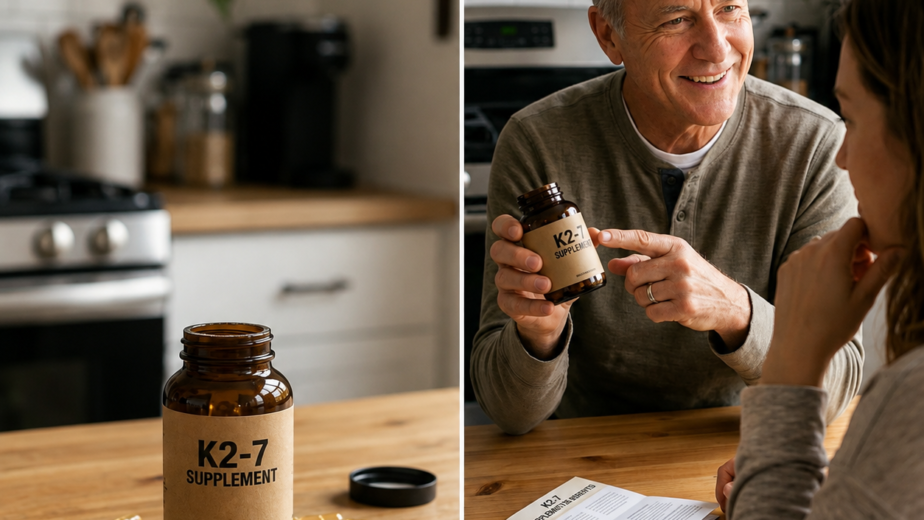
Vitamin K2 (MK-7)
The elongated form of vitamin K2, referred to as menaquinone-7 (MK-7), facilitates the synthesis of Matrix Gla protein (MGP), which is said to be the most powerful inhibitor of arterial calcification. With the action of vitamin K2, MGP helps in removing the calcium from arteries into the bones.
When you don’t get enough K2, MGP stays in its inactive form (measured in labs as dp-ucMGP), and calcium is freer to accumulate in vessels. Researchers now treat that inactive marker as a red flag for both arterial stiffness and cognitive decline.
A study carried out over three years in a double-blind, placebo-controlled design, which appeared in Thrombosis and Haemostasis (Knapen et al., 2015), proved that taking 180 µg of MK-7 each day helps in reducing stiffness and increasing flexibility of blood vessels in healthy women. Another study carried out over a year involving participants aged between 40 to 70 years who were deficient in vitamin K showed that 180 µg each day reduces artery stiffness.
Animal studies show MK-7 can reduce calcification of vessels feeding the brain and ease neuroinflammation and the biology connecting vascular health to cognition is well established. But large human trials proving that K2 directly slows cognitive decline haven’t been completed yet.
How TerraQuino Helps
The quality of the ingredient decides whether it actually works. Bioavailability and stability vary widely from source to source.
TerraQuino supplies a premium, allergen-free Vitamin K2-7 (MK-7) made through a controlled fermentation process and engineered for high bioavailability and stability. Designed for formulation flexibility across capsules, softgels, sachets, and liquids, TerraQuino gives the brands you trust a research-driven K2-7 to build dependable products around. So, the K2 you take is the kind your body can actually use.
Frequently Asked Questions
- What is the link between blood vessels and brain health?
Neurons require regular access to oxygen and glucose supplied by cerebral blood vessels. Hardening of these blood vessels results in reduced blood supply, which may lead to brain fog and, eventually, an increased likelihood of suffering from vascular cognitive impairment.
- How does Vitamin K2 (MK-7) protect cerebral blood flow?
MK-7 works by activating Matrix Gla Protein, which is the most potent anti-vascular calcifying compound that your body possesses. It helps flush away excess calcium from arterial walls, ensuring flexible arteries and continuous supply of blood to all parts of the body, including the brain.
- Does Vitamin K2 prevent dementia or cognitive decline?
The vascular mechanism is well supported, and a 2025 review highlights the K2–vessel–brain connection. However, large human trials directly proving K2 prevents cognitive decline are still lacking, so it’s best viewed as a promising, mechanism-backed strategy rather than a guaranteed cure.