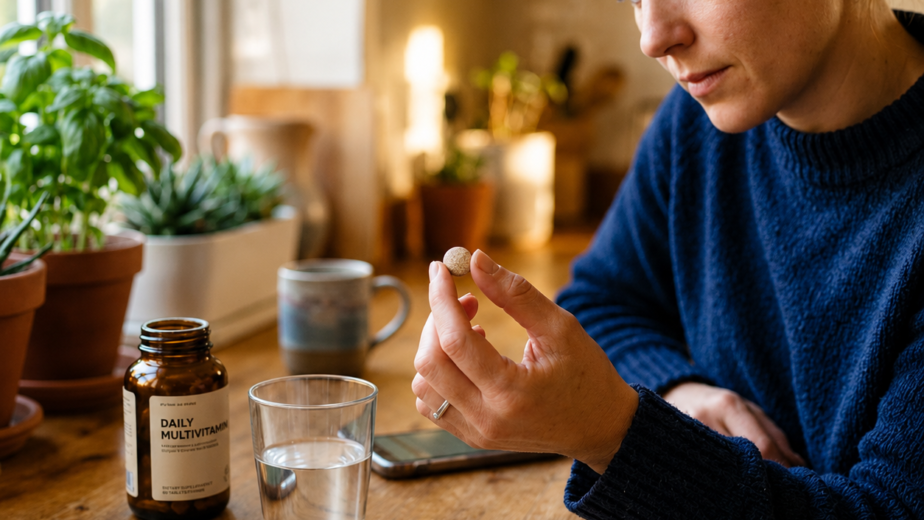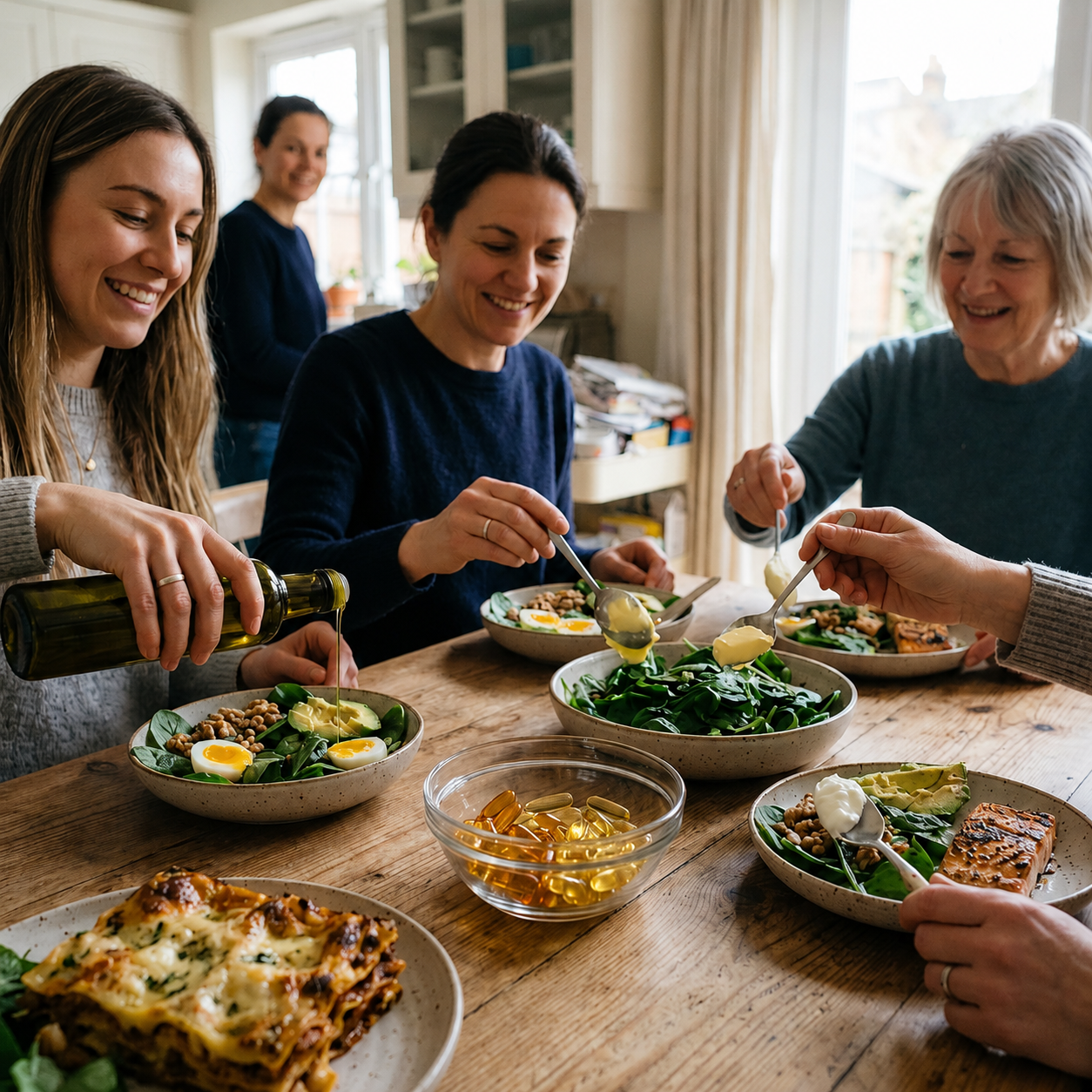
It was found out that even if you take the same dosage of vitamin K with your regular meal, there might be chances of the same vitamin reaching your blood in much lesser amount.
In a trial, participants took identical capsules of stable-isotopes-labelled vitamin K alongside one of the three meals: a fish pie, a beef lasagne, or a chicken pie with beans and chips. Absorption was found to be significantly higher with fish pie and beef lasagne than the chicken pie (Jones et al., 2009).
Vitamin K2 is a fat-soluble vitamin. This simply means that it requires a transport medium to enter the body.
Menaquinones cannot cross the intestinal wall as free molecules. Bile salts and dietary fat form mixed micelles in the small intestine, the vitamin dissolves into them, enters the intestinal cell, and is then loaded into chylomicrons and released into the lymphatic system before it reaches the bloodstream. Therefore, without the fat molecule this whole process would be affected.
This is the reason why vitamin K research is consistently done with oil. When the different vitamin K form travel routes through blood were tracked, it was found that the dose dissolved in corn oil and all of them left the gut on triacylglycerol-rich lipoproteins (Schurgers & Vermeer, 2002). So, now it is known that vitamin K travels on the body’s fat delivery network and it does not have its own travel machinery.
The Butter Experiment
In this particular experiment, five healthy volunteers took 1 mg of vitamin K under different conditions. First, as a pharmaceutical preparation; second as spinach; and third as spinach eaten with butter.
Circulating vitamin K after plain spinach was 24.3 times lower than after the pharmaceutical preparation. Add butter and the difference narrowed to 7.5-fold. The spinach was the same, the vitamin was the same. The only difference was a spoonful of fat that roughly tripled the amount that showed up in blood.
Five people is a small study, and it used K1 from a vegetable rather than K2 from a capsule. But the direction is held.
Fat is necessary. It is not sufficient.
This is where most of the advice falls short. Even if the meals matched in their fat percentage, the absorption was still different. The clearest compositional gap was in fatty acid type. That poorly absorbed chicken pie meal was 37% polyunsaturated fat, against 14 – 19% in the other two. The authors suggested this may have changed how the mixed micelles behaved or how the meal’s fat was processed afterwards, while being clear that the design could not prove it. (Jones et al., 2009).
A second line of evidence is when researchers gave labelled vitamin K and looked for what predicted the plasma response, the answer was the meal’s triglyceride response, not the participant’s age and not their existing vitamin K status (Ellis et al., 2019).
The vitamin’s fate is decided by the fat. When stated plainly, a K2 dose is only as useful as the wave of dietary fat carrying it.
A Few Practical Things to Follow
Take K2 with the meal that has real fat in it. Ghee, olive oil, nuts, eggs, curd, cheese, or an ordinary home-cooked meal all qualify. Do not assume a bigger number on the label makes up for an empty stomach. Absorption happens first.
Form matters alongside food. When MK-4 and MK-7 were compared directly in healthy women, even large single dose of MK-7 were undetectable in serum, while MK-7 was absorbed reliably in every participant (Sato et al., 2012).
Even food pairing cannot rescue a form that does not circulate.
Taking K2 with vitamin D is sensible as both are depended on the same type of fat.
CAUTION: Anyone taking warfarin should not change their vitamin K intake without speaking to their doctor.
Where TerraQuino Fits
TerraQuino supplies vitamin K2 in MK-7 form specifically. MK-7 is the long-chain form and it is supported by the bioavailability data as well.
The ingredient is produced by a controlled fermentation process; is allergen-free; and built for use across tablets, capsules, softgels, sachets and liquids.
For companies formulating K2 alongside vitamin D, calcium or magnesium, batch-to-batch consistency is what keeps the label claim and delivered dose in the same conversation.
Frequently Asked Questions
Does vitamin K2 have to be taken with food?
Yes, it is preferred. K2 needs bile salts and dietary fat to form micelles that carry it across the intestinal wall. If it is taken on an empty stomach then a meaningful share of the dose would never get transported.
How much fat is enough?
There exists a threshold. Research have tested realistic meals over just fat minimums. And the studies show that a normal mixed meal containing visible fat works, while composition influences the result as much as grams do.
Does the time of the day matter?
Not really. Mostly meal matter as the evidence also points to taking K2 with whichever meal reliably contains fat.
References
Booth, S. L., Golly, I., Sacheck, J. M., Roubenoff, R., Dallal, G. E., Hamada, K., & Blumberg, J. B. (2004). Effect of vitamin E supplementation on vitamin K status in adults with normal coagulation status. The American Journal of Clinical Nutrition, 80(1), 143–148. https://doi.org/10.1093/ajcn/80.1.143
Ellis, J. L., Fu, X., Al Rajabi, A., Grusak, M. A., Shearer, M. J., Naumova, E. N., Saltzman, E., Barger, K., & Booth, S. L. (2019). Plasma response to deuterium-labeled vitamin K intake varies by TG response, but not age or vitamin K status, in older and younger adults. The Journal of Nutrition, 149(1), 18–25. https://doi.org/10.1093/jn/nxy216
Gijsbers, B. L. M. G., Jie, K.-S. G., & Vermeer, C. (1996). Effect of food composition on vitamin K absorption in human volunteers. British Journal of Nutrition, 76(2), 223–229. https://doi.org/10.1079/BJN19960027
Jones, K. S., Bluck, L. J. C., Wang, L. Y., Stephen, A. M., Prynne, C. J., & Coward, W. A. (2009). The effect of different meals on the absorption of stable isotope-labelled phylloquinone. British Journal of Nutrition, 102(8), 1195–1202. https://doi.org/10.1017/S0007114509371688
Sato, T., Schurgers, L. J., & Uenishi, K. (2012). Comparison of menaquinone-4 and menaquinone-7 bioavailability in healthy women. Nutrition Journal, 11, 93. https://doi.org/10.1186/1475-2891-11-93
Schurgers, L. J., & Vermeer, C. (2002). Differential lipoprotein transport pathways of K-vitamins in healthy subjects. Biochimica et Biophysica Acta (BBA) – General Subjects, 1570(1), 27–32. https://doi.org/10.1016/S0304-4165(02)00147-2
Shearer, M. J., & Newman, P. (2008). Metabolism and cell biology of vitamin K. Thrombosis and Haemostasis, 100(4), 530–547. https://doi.org/10.1160/TH08-03-0147
Tan, J., & Li, Y. (2024). Revisiting the interconnection between lipids and vitamin K metabolism: Insights from recent research and potential therapeutic implications: A review. Nutrition & Metabolism, 21, 1. https://doi.org/10.1186/s12986-023-00779-4