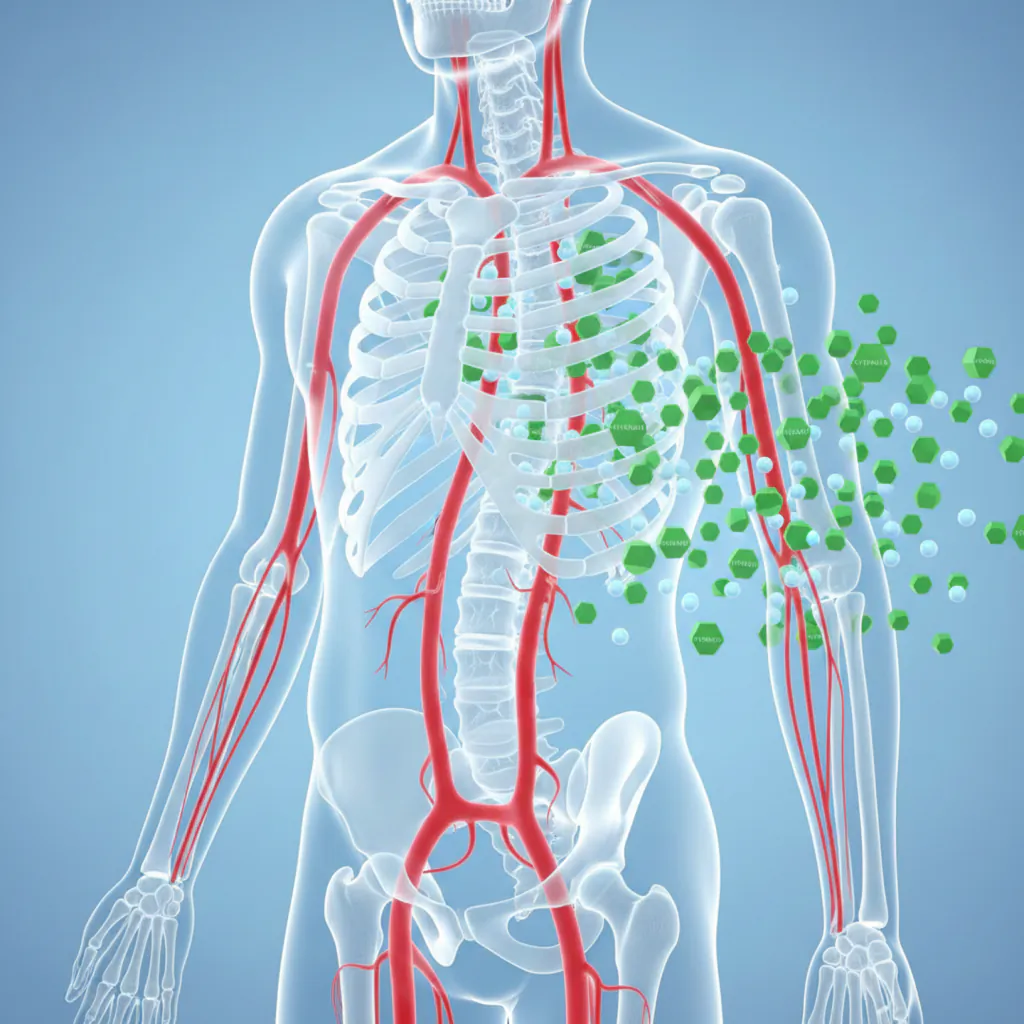
Have you ever thought about whether the calcium intended to strengthen your bones could be depositing where it doesn’t belong? Or what your body really does with the calcium being absorbed to make your bones stronger? The answer lies in the fact that when calcium and a host of other minerals are not properly controlled and utilized, they quietly work against you, creating problems with your arteries and your joints.
Why More Isn’t Always Better?
Let’s understand the calcium paradox.
This nutrient, calcium, forms the axis of many biological functions, including the complement of muscular movements and the development of strong bones. The actual concern, however, lies not in the consumption of calcium but in the way the body directs this nutrient to the appropriate body parts. The moment this regulatory mechanism in the body fails, the onset of a phenomenon called ectopic calcification is felt.
The consequences are quite serious. Instead of being built into bone, excess calcium can be deposited in the arterial walls and lead to vascular calcification and increased cardiovascular risk. At the same time, poor calcium deposition in the skeleton will weaken the structure of bone and increase vulnerability to osteoporosis and fractures. As published in the landmark study Knapen et al. (2015), researchers found that without proper K2 levels, calcium is significantly more likely to accumulate in soft tissues rather than bone matrix. Additionally, people who consume very high levels of calcium without good metabolic regulation have an increased risk of arterial calcification by about 15%, compared with those with normal calcium handling.
Turning Back the Clock:
Vitamin K2 has numerous benefits that extend beyond the skeletal and cardiovascular systems. It is also vital for preserving the youthfulness of tissues. One of the most defining aspects of aging is the loss of elasticity in the skin and connective tissues. This is primarily because of the calcification of elastin, which is the protein that is responsible for the elasticity of the skin.
Research indicates that vitamin K2 is effective in preventing the mineralization process in elastic fibers. Elastin calcification results in a loss of elasticity, causing the development of wrinkles, sagging skin, and hardened blood vessels.
Terraquino K27 functions by ensuring that calcium is present in the body and in the correct locations, thus preserving elastin and acting as a shield against both visible and silent aging.
The Core Issue:
The human body always needs a precise system of regulations to ensure that calcium arrives at the right location. This is exactly what two vital proteins (Matrix Gla Protein (MGP) and Osteocalcin) do in controlling the location of calcium.
However, by themselves, they do not have any effect. They need to be activated by a particular trigger that occurs naturally in the body. That trigger, in this case, is vitamin K2, which, through a process referred to as carboxylation, activates MGP and osteocalcin into their active forms, allowing them to undertake the task of removing calcium from the blood vessels and securing it in the bone, where it is needed.
How Terraquino K27 Addresses the Calcium Imbalance?
Terraquino developed K27 to provide a highly active form of vitamin K2 that turns on the body’s calcium-regulating system. This is how K27 reshapes calcium metabolism at a functional level:
- Enhanced Bioavailability:Not all forms of vitamin K2 have the same effect in the body. According to the research paper Sato et al. (2012), the MK-7 form (found in K27) stays in the blood for days, whereas other forms like MK-4 disappear in hours. This long-lasting presence ensures that your “calcium traffic controllers” are active 24/7.
- Targeted Bone Strengthening:K27 not only has supportive benefits for cardiovascular health but also for skeletal integrity. As shown in the study results of Knapen et al., 2013 consistent intake of MK-7 supplements significantly support the slowing of bone loss by ensuring osteocalcin is maximally carboxylated and therefore active, balancing calcium binding within the bone matrix for optimal bone mineral density.
Take Control of Calcium:
Failing to properly manage calcium is likened to opening your house without checking. What’s meant to help can easily cause harm. Without proper direction, calcium could end up in places where it is more harmful than helpful. Using Terraquino K27 in one’s daily life is not just about supplementation, it is about regaining proper management of how one uses calcium in the body.
With the right regulatory support in place, calcium is properly channeled away from your arteries and joints and toward strengthening your bones, where it should be in the first place.
Don’t leave it to chance, take charge of it with Terraquino.
References:
- Knapen, M. H., Braam, L. A., Drummen, N. E., Bekers, O., Hoeks, A. P., & Vermeer, C. (2015). Menaquinone-7 supplementation improves arterial stiffness in healthy postmenopausal women: A double-blind randomised clinical trial. Thrombosis and Haemostasis, 113(5), 1135–1144. https://doi.org/10.1160/TH14-08-0675
- Knapen, M. H., Drummen, N. E., Smit, E., Vermeer, C., & Theuwissen, E. (2013). Three-year low-dose vitamin K2 supplementation helps decrease bone loss in healthy postmenopausal women. Osteoporosis International, 24(9), 2499–2507. https://doi.org/10.1007/s00198-013-2325-6
- Sato, T., Schurgers, L. J., & Uenishi, K. (2012). Comparison of menaquinone-4 and menaquinone-7 bioavailability and vitamin K status in healthy women. Nutrition Journal, 11(1), 93. https://doi.org/10.1186/1475-2891-11-93